
JASC News
2026 Trade Shows and Conferences
501F & G Users Group Conference 2026
February 15 – February 20, 2026
Hilton Norfolk The Main, 100 East Main Street
Norfolk, VA
Space Symposium
April 13 – 16, 2026
The Broadmoor
Colorado Springs, CO
2026 7F Users Group
May 18 – 26, 2026
The Woodlands Waterway Marriott Hotel & Convention Center
The Woodlands, TX
2026 Legacy Turbine Users Group Annual Conferences
(7EA, 6B, and Frame 5)
June 22 – 25, 2026
Omni Hotel
Oklahoma City, OK
Energy Tech Review 2022
“We rigorously test and evaluate each valve individually to ensure they conform to the unique performance specifications defined by the clients.”
Schuyler McElrath
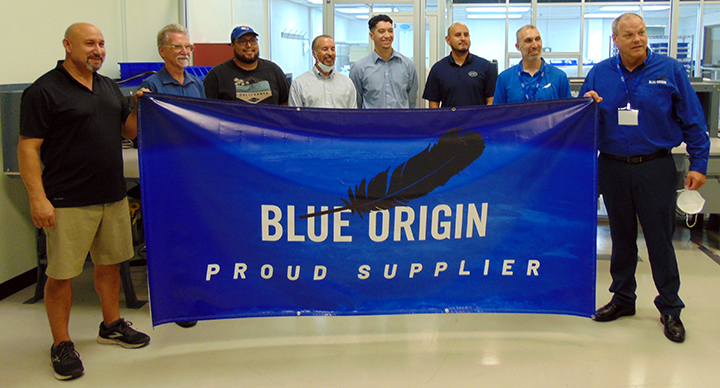
Blue Origin Visits JASC
On August 19, 2021, JASC was pleased to host representatives from Blue Origin’s New Shepard engineering and sourcing staff at our facility in Tempe, AZ.
Blue Origin presented JASC with a certificate of supplier excellence and appreciation for being one of their key suppliers for New Shepard.
JASC looks forward to continuing our relationship with Blue Origin for years to come and will strive to maintain our excellent supplier status for the New Shepard and New Glenn programs.
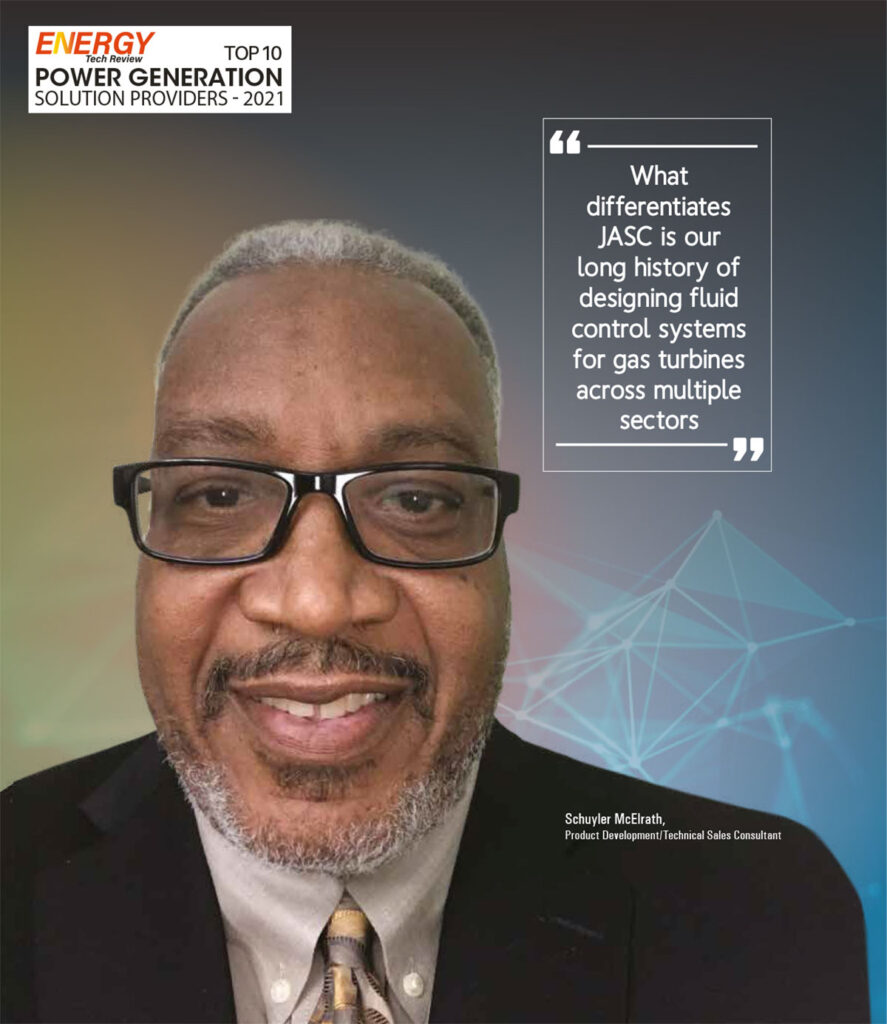
Energy Tech Review | August 2021
Designing the Next Generation of Valve Systems
While quick fixes seem simpler and more affordable, in the long run, they only add up to the costs without generating real results.
Here’s why JASC is a partner of choice for OEMs and industrial clients.


The Road to 100% Reliability in Liquid-Fuel Starts, Transfers on Dual-Fuel Engines
Recently, JASC was featured in Combined Cycle Journal, Number 22. Here’s an excerpt from the article:
The spate of lawsuits filed in the aftermath of the 2021 winter storm that left millions in Texas without power for days and sent natural gas prices soaring to their highest levels in years — up nearly 17,000% in some cases, according to a Wall Street Journal — report testify to the value of having to fuel gas turbines as part of the generation mix.
The well–recognized ability of gas turbines to generate power at high efficiency and with minimal emissions is only one important attribute of these flexible machines. In emergencies, they can start within minutes and when equipped for black-start service can be a major factor in grid restoration as they first did immediately after the Great Northeast Blackout of 1965.
The most–recent Texas experience suggests a re-examination of the financial logic associated with buying gas–only engines may be in order.
In many instances, gas only is an appropriate choice: Capital cost is lower than for a dual-fuel machine; no backup liquid-fuel system is required; environmental and safety requirements are reduced; overhauls are less time-consuming and costly; training of plant personnel is simplified. In some cases, the presumed advantages of gas-only operation convinced owners to remove liquid fuel hardware from their engines and abandon in place or remove their oil-storage and fuel-transfer infrastructure.
However, business conditions in the electric-power industry were always in a state of flux. Today, with renewables in regulatory favor, it can be difficult to extract a profit from fuel fired assets in some areas of the country if they are not equipped to start and run reliably on oil when gas is not available.
Reliable operation demands attention to detail in fuel-system design and equipment selection, which are impacted by such variables as the time allowed for startup on oil or for transfer from gas to oil, the financial penalty of a failure to start on oil, reliability/availability requirements of the off taker, etc. But be confident that there are commercially available dual-fuel solutions to meet your needs. Success depends in large part on your ability to achieve the following:
- Assure reliable hot gas path (HGP) hardware is installed in your engine.
- Design a fuel system capable of providing the level of reliability on liquid-fuel starts and transfers needed to meet contractual requirements.
- Maintain backup liquid fuel in top condition.